


Four Takeaways From PRfect Pitch Interview with Fast Company Contributor Susan Karlin
PRfect Pitch focuses on interviewing media and key event managers who PR agencies pitch regularly on behalf of clients. As the name implies, successful pitching is a key ingredient in achieving results as a public relations professional.
The podcast discusses how and when to pitch a story to editors and producers who in turn learn which PR sources can be trusted to bring them interesting stories that resonate with their audience.
Our third guest was Susan Karlin, a regular contributor to Fast Company, where she covers space, science, autonomous vehicles, and the future of transportation. Susan has traveled to a long list of countries to cover stories and loves learning about new cultures, emerging trends, and the people behind them.
Nicole and Susan talked about best practices for pitching new journalists, how to maintain a friendly yet professional ongoing relationship that benefits both parties, and more. Here are a few takeaways:
You Need To Know Clients’ Messaging Like The Back Of Your Hand
Consistent messaging is key. As a PR professional, it’s important that both the client’s website and how the firm is positioning the client in a pitch are consistent.
Accurate messaging is the first step in a journalist deciding whether or not they want to work with you. For Susan, when she works with a PR professional, she looks at it as a partnership and trust is at the core. “If a publicist is good at their job, they’ll know their client inside and out,” Susan said.
When a journalist looks at a pitch, they want all of the necessary information right off the bat. If there are additional questions, it’s easier for a journalist to ask the publicist who knows the messaging, rather than waiting for a CEO to get back to them.
It’s important to note that there’s a process that journalists follow. If the publicist has all the answers, then a journalist can go directly to their editor and pitch the story. Not only is this quicker, but also makes it more likely that a story will be written.
Be Flexible
If someone writes for a variety of publications, like Susan, the publication you pitch her for might not work, but another will. Every publication is different — sometimes it’s the journalist who can decide whether or not a story will run, and other times it’s an editor, like at Fast Company.
If you’re flexible and open minded, you’ll likely lock in a story, even if it’s not what you initially had in mind.
Additionally, if you go into a pitch idea open to other opportunities, you will grow as a PR professional, while also making a journalist friend at a new publication.
Thoughtful Subject Lines Are Imperative
Does this sound familiar? It’s a common theme in PRfect Pitch interviews and there’s a good reason why.
You may remember Jessica Naziri’s interview where she mentioned that email subject lines let a journalist know right off the bat if they’d like to move forward with a story. Susan feels the same.
Journalists are often pressed for time, which is why subject lines are important. A journalist will begin by skimming their email, and if a subject line piques their interest they’ll open the email and read the first few sentences for more information.
That said, you want to make sure that the subject line and body of the email provide all of the necessary information. As Nicole said, “Do your homework, know the journalist's needs, understand what your client is trying to accomplish, and be honest.”
Journalism Is An Interpretative Art
Journalism is subjective. There’s no one way to understand something and this is one reason why journalism is an interpretive art. Think of it as presenting a scenario as opposed to coming up with something from scratch.
As technology, companies, and platforms evolve, there’s always something new to learn and everyone will have their own take on it, which is part of the art of journalism as well.
Journalists must pivot based on what’s going on in the world and part of this interpretive art is understanding what others want to see based on timeliness.
“I often speak with publicists about branding and presentation,” Susan said “A lot of people who have been in the field for about 10 years feel that there's nothing else to learn. However, this is far from the truth.If you are still learning in your job 20 or 30 years later, you are really lucky.
That’s the beauty of journalism. There’s always something new to learn. As Henry Ford once said, “Anyone who keeps on learning not only remains young, but becomes constantly more valuable, regardless of physical capacity.”
You can listen to this season of PRfect Pitch via YouTube, Apple Podcasts, or your preferred podcast platform. The full interview with Susan can be found here!


Why Your Company Needs PR to Build and Maintain a Positive Public Image for Your Brand
While some say a good product sells itself, if you have a great product and no one knows about it, your brand will not be associated with anything worthwhile.
Public relations can be a valuable part of your business plan and marketing toolkit as long as you know what PR can and cannot do. If you aren’t sure, we defined it here.
Your PR team, whether in-house or an agency, needs to work closely with you to ensure that the company messaging being shared with the media aligns with the message your company wants to share publicly. PR is a critical part of any company and here are a few reasons why.
PR Can Build Credibility For Your Company
Every media outlet has its audience, readers, viewers, and/or followers who have learned to trust what that outlet is telling them. PR professionals continually cultivate and reinforce relationships with media to foster trust.
This relationship offers information and resources that outlets need to create a trustworthy piece of coverage. An organization can build its own credibility and trust by having reliable products and services, however, PR can help build credibility for the company by framing stories about the company’s good works.
Executives can do their part by being honest as spokespersons, through participation in industry events, and thought leadership activities that demonstrate valued expertise in a specialized field. Thought leadership is based on subject matter experts’ ability to discuss industry issues going beyond talking about what your company is doing.
PR Can Build and Leverage Visibility For Your Company
Any public attention for your company builds visibility. The more visibility your press coverage has, the more potential it has for positive impact.
One story may be picked up by several outlets, which helps build this visibility. A news section on your company’s website keeps these stories active and discoverable.
As social media continues to dominate in our society, sharing coverage on social media with the expectation that company employees will also share the stories on their social networks helps build exponential coverage.
Videos and podcasts are also great additions to content offerings and may include recorded interviews and speaking presentations from conferences and internal events. Our CEO Nicole Rodrigues has a podcast where she discusses everything you need to know about PR and more. If you’re still wondering why you need PR, give it a listen here.
PR Can Share Stories About Your Company
Stories personalize your company and products from two angles. It is important that the story be targeted to the appropriate audience and PR professionals have the knowledge of media outlets and staff to know how to tailor stories for their particular audience.
Stories make it easier for a potential or present customer to remember the intended message and make them more likely to share the story.
Moreover, if it is a story about solving a pain point for that audience, it will attract the attention of those with that problem and they may turn to the product or service to alleviate the problem they are having. It’s the old WIIFM—what’s in it for me?
PR at its core is about building and maintaining a positive public image for your brand. Perception is reality and while you may be doing many great things behind the scenes, if your various publics do not know about what you’re doing, it’s like it never happened.
Experienced, proficient PR pros focus on building solid relationships, so that they will share information that conveys the right image for your company. Never underestimate the value of a good PR team for creating, enhancing, and sharing positive brand identity.
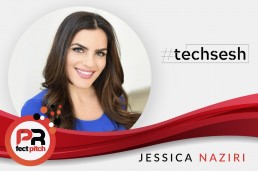
Four Takeaways From PRfect Pitch Interview with TechSesh Founder, Jessica Naziri
PRfect Pitch focuses on interviewing media and key event managers whom PR agencies pitch regularly on behalf of clients. As the name implies, successful pitching is a key ingredient in achieving results as a public relations professional.
The podcast talks about how and when to pitch a story to editors and producers who in turn learn which PR sources can be trusted to bring them an interesting story that resonates with their audience. Our second guest was Jessica Naziri.
Jessica is the founder of TechSesh, a lifestyle blog with a mission to bring tech to women and women to tech. Jessica talked about her impressive career in branding, marketing, journalism, and now as an industry leader and connector.
She shared the inspiration behind starting TechSesh, her advice for companies looking to get their product featured, thoughts on influencer marketing vs. traditional PR, and more. You don’t want to miss this interview! Here are a few takeaways:
Journalism and Editorial Content Is Different
Journalism has shifted overtime. If you look at major publications like the LA Times and NY Times, they each have a page dedicated to folks and companies who want to have their companies written about.
However, Jessica points out that there’s a difference between journalism and editorial content that most people don’t understand. Here are the two key differences:
- Journalistic content is unpaid because journalists are meant to state facts without having an opinion.
- Editorial content means your opinion is your job, so it’s often paid opportunities.
“I’m not here to take assignments because someone tells me to review something. I make the decision on if I’m going to or not going to try a product out. My opinion is my job,” Jessica said. “However, the line between paid and unpaid content is often blurred, and it’s important for PR and communication pros to understand this and let their clients know as well.”
PR Pros Shouldn’t Expect Anything From Journalists
“PR people aren't gatekeepers, they are facilitators,” Jessica said. “As a PR pro, you should know that your job is to convey messaging to the journalist and/or influencer, who ultimately decides if they want to cover the story and/or product.”
Jessica talked about how one of her pet peeves is when a company will send her products and ask her to do five Instagram stories, a blog post, an Instagram post, and a video. This is never how you should approach a journalist.
It’s important to know what beat someone covers. If they’re an influencer, what are they covering that’s organic? What are the latest tech trends? If you have this information going into a pitch, you can leverage it in your initial messaging to a journalist. This makes it more likely that they will respond to your pitch.
Subject Lines and Media Kits Are Key In Email Creation
Email subject lines are important because they let a journalist know right off the bat if they’d like to move forward with writing a story. It’s imperative that the subject line be short, sweet, and to the point, especially because so many people check email from their phones nowadays.
If you start a subject line with something along the lines of, “Joe was part of this webinar and you should check it out,” it isn’t as clickable as “The #1 rated webinar in the world interviewed Joe about PR.” You want to make the “why” at the beginning of a subject line,” so that a journalist knows what they’re about to read.
Media kits are also important when sending an email. Here are a few reasons why:
- Journalists will have all the information needed if they’re going to write a story
- It shows if a story will be visually appealing
- If all of the content is provided from the start, the journalist won’t need to go online to find photos and information on the product. It’s all there in a concise way.
What should be included in a media kit to make the most of it?
- Information on the founder and their backstory
- The backstory of the company and/or product
- How much funding the company has
- Headshots of the founder(s)
- Images of the product
The Future Of Technology Is Now
We’re in the midst of a pivotal part of the evolution of technology. In our virtual world, applications like Clubhouse are showing us that the future is here. We’re moving toward this new route of listening and being able to reach more people at the same time.
This progression can be seen as podcasts being what YouTube was 10 years ago and Clubhouse being the new podcast platform.
There’s so much great content on Clubhouse, even for journalists. PR pros can find ways to pitch people in these rooms and from a journalist's perspective, Jessica looks for people whose audience will appeal to hers.
Media are looking for thought leaders in these rooms and journalists are relaying information to users in Clubhouse as well. We’re seeing a new wave of influencer and PR marketing that PR pros should take part in.
You can listen to this season of PRfect Pitch via YouTube, Apple Podcasts, or your preferred podcast platform. The full interview with Jessica, you can find it here!
What Makes Tech PR Different from Traditional Public Relations?
Fifty-nine percent of PR pros feel that technology will drive considerable change to the industry — USC Annenberg, 2019
To understand tech public relations, you must first understand what PR actually is. According to PRSA, PR is “a strategic communication process that builds mutually beneficial relationships between organizations and their publics.” Now, let’s break that down.
- PR is about building and maintaining relationships with the media.
- One way that PR professionals analyze media is based on SWOT analysis, focusing on a person and/or company’s strengths, weaknesses, opportunities and threats.
- At our core, PR pros are communicators.
There are many different areas of PR that one can go into. Whether it be crisis communications, internal relations or media relations, one thing is for sure: Tech PR is different than the rest. Here are a few reasons why:
Tech PR Targets A Niche Audience
The difference between traditional and tech PR is that tech PR targets a very niche audience. While traditional PR still has a target audience, it’s likely to be a broader spectrum.
PR is becoming more specialized and tech PR is one of the branches of the evolution of our industry. Not only do PR firms “need a firm grasp of how to grow and manage the reputation of your brand, but they also require an in-depth understanding of current technology trends,” according to Publicize.
An in-depth understanding of current technology is imperative in tech PR, which is why this next reason is essential to being successful in this industry.
Technology Itself Is Essential For Any Successful Business
Technology is constantly changing, and in today’s digital world, you can’t have a business without adapting to the change. PR professionals are communicators and one part of this is communicating with customers/consumers.
As the face of a brand, PR professionals want to ensure that the public knows why your product or service is the best. By staying up-to-date on the newest technology as a tech PR firm, you can leverage this when pitching a product or service, so that others know your offerings are best-in-class.
People also consume news every day on their electronic devices. We’re constantly using them as a resource, so it’s important to focus PR efforts on both technology being an enjoyable part of life as well as a necessity for today’s generation.
This leads into the next reason why tech PR stands out from the rest.
Tech PR Helps Position You As An Authority
According to the Merriam-Webster dictionary, an authority is someone who has the “power to influence or command thought, opinion, or behavior.” Positioning yourself as an authority takes time.
To be a true authority, you need to provide value to others, engage with your community, and build authentic relationships. This is where PR comes in.
PR allows you to develop relationships with other journalists who will help build your authority. These relationships influence how much traction your website receives and ensures that the information about you or your product is positive and is reaching the right audience.
Lastly, once these relationships with journalists are formed, they’ll likely want to stay up-to-date on all things news-related for your company. The more information out there, the more of an authority you are!
COVID-19 Has Revolutionized Tech PR
As companies transitioned to solely working from home, new technologies were created and others adapted to the needs of work-from-home professionals. Now, as we’re seeing the light at the end of the tunnel, many companies have announced hybrid work or the end of working from home, which means the technology may soon be changing again.
As more resources are needed for hybrid work and other companies like Google begin offering permanent remote work opportunities, technologies will come out to help make this transition easier.
PR pros need to be mindful of what’s going on in the world, while simultaneously showcasing the work that is helping us all get through these difficult times.
This is where corporate social responsibility (CSR) comes into play. More than ever, we’re seeing people choose whether or not they want to associate themselves with a company based on the philanthropic work that they do.
If your company is donating a portion of proceeds to COVID-19 relief efforts, it’s important to make that known, not only from a PR standpoint, but also because it can help influence others to do the same.
Overall, traditional and tech PR differ in many ways. Whether it be through leveraging your work to become an authority, adapting to the changes and needs of users or branding yourself to a niche audience, we’re seeing a need for technology more than ever, which is both exciting and empowering for those in PR. Technology is driving our industry and it’s up to us to make this a positive driving force for others.

Four Takeaways From PRfect Pitch Interview with VentureBeat’s Dean Takahashi
When our CEO and Founder, Nicole Rodrigues, came up with the idea for her PRfect Pitch podcast, she hoped to spark an ongoing meeting of the minds, where members of the media could share their honest thoughts, tips, preferences (and pet peeves) with PR professionals to help align, elevate, and empower the overall pitching and storytelling process.
Her aim for the show was to reveal some of the best kept secrets of what sets meaningful public relations activities apart from the pack, and to give our media counterparts the opportunity to tell us what, exactly, they want and need from a pitch.
Now, after a brief pause, PRfect Pitch is back — and better than ever!
First up on the revamped PRfect Pitch guest list was Dean Takahashi, lead writer for “GamesBeat” at VentureBeat, author of two books (Opening the Xbox and The Xbox 360 Uncloaked), and organizer of the annual GamesBeat Summit conference.
Throughout the interview, Dean shared some expert insights and pro tips with Nicole that you don’t want to miss! Here are a few:
In Order to Cover Something Well, You Should Immerse Yourself into the Subject
If you care about the subject you’re covering, your work will show it. Not only does the energy that you put into writing and researching pay off, but you also enjoy the work that you’re doing as a result.
For Dean, this looked like starting his career covering video games — a less prevalent topic at the time, but something he loved researching and writing about. As gaming has since skyrocketed in popularity, he has been able to carry that beat throughout the many phases of his career.
This kind of mentality helped Dean grow over time, and is something you can do too. Afterall, immersing yourself into the subject is how you learn the best.
Journalists Want to See Creativity and Consistency from PR Professionals
Whether working for newspapers or online publications, Dean says the trends for success remain the same — PR professionals should stay creative, consistent and always offer value in their pitches.
One way to catch a journalist's eye is to write “embargo” in the subject line of a pitch. Why? Because someone like Dean gets over 500 emails a day, so he needs to be able to decipher between a pitch that will pique his interest and one that won’t.
Similarly, journalists love exclusives. There's a sense of urgency if a journalist knows that they can break a story and it helps you stand out from the crowd.
Something else that Dean mentions is consistency. If a journalist doesn’t respond within 24-48 hours, follow up with them. They may not have responded because they haven’t seen the email or because the pitch angle wasn’t quite right.
As Dean says, “Telling the best story is sometimes more important than telling the story first.” So, don’t rush, and make sure your pitch is the best it can be.
Journalists Are Humans, Not Robots
While it would be nice if someone could be available 24/7, it’s simply not realistic. When pitching, it’s important that you give journalists time to not only read and respond to emails, but also allow time for them to craft their coverage.
Oftentimes, journalists plan a week or months worth of stories at a time, so if you pitch them an announcement happening the following day, that doesn’t give them adequate time to write a story if they’d be interested.
As a PR professional, you should put a story on a journalist’s radar early, so they have time to decide if it’s a good fit for their audience and if so, write their story.
Media Communication is Constantly Changing, and We Need to Evolve With It
Like every other industry, the art of journalism was greatly impacted by the pandemic. Networking is now more digital than ever and as a PR pro, we need to evolve with the industry.
Instead of attending an event or conference to network, we now have applications like Clubhouse that we use to connect with others. Dean discusses how this has been a great platform to come out of COVID-19.
Clubhouse offers the opportunity to connect with, learn from and showcase media opportunities in new ways. It's become the equivalent of going and listening to a panel, which has been a great way to virtually network during the pandemic.
“Clubhouse gives me the opportunity to meet people that I don’t already know,” Dean said. “The more people that you talk to, the less likely you’re locked into the wrong point of view.” This is why applications like Clubhouse are important in our digital world.
Dean also reminds us that we don’t have to rely solely on email to catch the media's attention. You can tweet someone, send a Facebook message or connect with them on LinkedIn —these are all great ways to connect, while also gaining more insight into their interests by observing what they post.
We are stoked to bring you this new and improved season of PRfect Pitch, which you can tune into via YouTube, Apple Podcasts or your preferred podcast platform. The full interview with Dean is available to watch here!
Why AI Cannot Replace PR and Communications Professionals
We are seeing more companies use AI and robots to replace people in the workplace. There are coffee shops that use robots to make and serve coffee, like Cafe X in San Francisco. There are also restaurants relying on robots to cook, rather than having employees, including CaliBurger in Pasadena, California. Slowly but surely, in the near future, we will see many more restaurants of this nature. Afterall, even self-driving cars will soon be tested more and more. We see robots and AI slowly taking jobs away from people, but one thing is for sure. AI cannot replace PR and Communications professionals, and here’s why:
Think About Siri…
Siri can be great. If you ask the right question it's programmed to answer. Have you ever asked Siri a question and not received the answer you were looking for? Did Siri just pull up a wikipedia page for you to click on? That’s because it can’t answer something that isn’t within the code she is programmed for. Something you would imagine Siri being programmed to answer are questions about the Iphone you have. Ask Siri if your phone is waterproof. It won't have the answer. As PR and Communications professionals, we have answers that Siri doesn’t have.
AI Is Programmed
The world around us is constantly changing. Think back to a week, month and year ago. Things are different now with the new political and environmental/health climate. Change is a natural process in life; However, AI cannot adapt like humans can. Was there a huge disaster you wanted to find data on, while simultaneously searching for data on unemployment? AI won’t focus on which one you find more important or which one is more prevalent within the area you are in at that moment. Rather, it will build data in the order you put it in the computer. This is because it doesn’t know the difference between what’s urgent and what is not. It also likely won’t find the data at the same time. You can’t build a strategy on programming because the world is constantly changing and you need to pivot with it - as we’re all learning from COVID and the Black Lives Matter protests circling the globe.
AI Doesn’t Know Who To Reach
So much of PR and communications jobs are building relationships with reporters and other journalists. For this to be successful, you have to know what each individual reporter and journalist's niche is and when the right time is to reach out. In this article, Forbes discusses the importance of being able to turnover stories quickly and efficiently, while also adding a creative spin to it. While AI and robots may be able to pick up keywords in an interview or story, it cannot dive deeper into the meaning and how to respond based solely on this.
AI lacks emotion
AI stands for artificial intelligence, not emotional intelligence. Part of PR and Communications jobs is that human to human connection. How do you build that connection looking at a screen? You can’t. According to PR Weekly, “The fact is that data is emotionally driven. Buzzy phrases like "data-driven decisions" only reinforce the misapprehension, if not the false ideology, that the best way to make decisions is rationally and devoid of emotion.”
What does this mean? It means that the data, which AI can produce, isn’t the full answer, because it is data and numbers driven. However, true data has an emotional side to it. Making decisions means being able to think rationally and logically, which AI simply cannot do. Therefore, in PR humans are an absolute necessity. Now that doesn’t mean AI can’t help improve what we do and can’t be used simultaneously. It means that we, as humans, are designed to be more agile than computers but we should still work on updating “our own systems” with constant learning and professional development so we don’t outdate ourselves the way computers and AI do.
Beginning To Switch From Working From Home Back To The Office
Transitioning from being in the office to working from home may not have been easy. It was likely something you had never experienced before. It happened quickly, but was necessary to keep everyone safe and healthy. Providing the tools for your employees to be able to do their work from home was and still is essential. Providing the same tools as people begin to return to work is even more necessary. As more news continues to come out about COVID-19, the future is unclear. Will you be able to come back to work within the next couple of months? By the end of the year? There are many unknowns, but here are a few things to keep in mind when deciding to make that switch.
Be Transparent
No one wants to be in limbo, but that is kind of how life is right now for everyone. Being transparent is the best thing you can do with your company. At this point in time, you probably don’t know when everyone will be back in the office. Be honest and upfront about that. A simple email to the staff saying you don’t have an update yet will be helpful. Even though you may not know, the rest of the office doesn’t know what you’re thinking. This will keep everyone up to date on what is going on, so they know to keep looking out for a future update.
Be Flexible
When the time comes and people begin to work in the office again, not everyone will be ready to return. Providing your employees with the opportunity to decide for themselves when to come back will do a world of wonder not only for the work they provide, but also for their mental health. If an employee works one week in the office and decides they aren’t ready to do it again, allow them to work from home. Maybe they thought it was the right decision, but it turned out not to be. Being flexible and working with them is the best thing you can do right now.
Plan Different Scenarios In Your Head
You can never be too prepared, especially during times like these. There are many different scenarios to imagine before having everyone come back to the office. What will you do if someone seems sick at the workplace? How will everyone take their lunch break while adhering to social distancing laws? Take a look at the way your office functioned before and be realistic about how things will be different now. If you have a plan ahead of time, it will be easier when the situation ultimately arises.
Sanitize, Sanitize, Sanitize
It is likely that computers and printers are frequently used in your office. Make sure at the end of the work day, every computer gets sanitized. Everytime the printer is used, sanitize it. Limiting the amount of markers that are being used and having people write with their pens in their notebooks will prevent further cleaning of whiteboards and markers. Anything that is being touched should be cleaned afterwards. While it may seem like tedious work, keeping track and making sure this sanitization of appliances happens is imperative.
Samantha is a Marketing and PR Assistant at NRPR Group.
What I’ve Learned My First Month of Working in PR
Working in the midst of a global pandemic is stressful. Working from home can be stressful. Starting your first job post-college, while working from home, brings on its own set of challenges. Beginning any job comes with a learning curve. It’s natural and expected and takes time to understand the way your new company works. Here are a few things I’ve learned in my first month of working in PR at NRPR Group.
Communication is key
While I knew about the importance of communication before this job, working at NRPR has reinforced how important communication really is. Working at an agency means you need to understand the marketing strategies of each client you are working with and their underlying goals and values. Check in with other team members who have been working with the clients, they’ll be able to help you. You just need to speak up and communicate what you need or want to know. There is nothing wrong with asking for help.
Study Your Clients
Along with communicating with your team about what you need, take the time and really study your clients. Look at their social media accounts and their website. Research the CEO and higher ups of the company. Find trends in their content, colors they use, study their syntax. This way, you’ll be familiar with the clients before talking with them and understand their brand more.
An added hint? Take notes on what you find while evaluating the clients to help you notice the trends you find.
Take Notes
The transition period at a new job often means there will be countless meetings. Meetings to meet your clients, meetings with your boss. Taking notes will allow you to process all the information at your own time and pace. If you are trying to do something new, you'll be able to come back to the notes you took and see the walkthrough you learned about previously. These notes will come in handy and you’ll be glad you took them.
Give Yourself Leeway If You Don’t Get Something Right, Right Away
I know it’s easier said than done, but giving yourself space to get things wrong and do assignments incorrectly is how you learn. Maybe a project wasn’t explained fully or you have to do extra research before beginning a project or you just do something completely wrong, that’s okay. Don’t be so hard on yourself. Starting a new job can be stressful and not everything will go your way the first time around. This is part of being in the workforce.
At the end of the day, starting a new job will come with pressure. However, you should be proud of yourself for getting the position and take a moment to let that sink in. You proved yourself in the interview process, and now it’s time to prove yourself through the work you produce and submit. Make your company glad they hired you and make a difference!
Samantha is a PR and Marketing Assistant at NRPR Group.
NRPR Celebrates its 6th Anniversary
Congratulations to NRPR Group on its 6th anniversary today! It is an exciting time to be celebrating, even in the midst of a pandemic. We have seen continuous growth throughout the years, and continue to see it even given the climate of the world right now.
Looking back on the last six years, Nicole had a “five-year plan,” which has far exceeded her expectations. She states that, “I am happy to say that we have surpassed so many of the goals I originally set and continue to serve clients with new services such as video and production.” NRPR has had the opportunity to work with over 80 clients throughout the years and this number continues to grow.
Here is NRPR throughout the years:
NRPR Group launched in 2014 and slowly began celebrating new and exciting milestones. The first one being in 2015 with the win of the “Gold in the Bulldog Reporter” Award in the New Agency of the Year Category. Following this win in 2016, NRPR received a “Silver Video of the Year award” for its PRactical Guide to Publicity video series, hosted by our CEO, Nicole Rodrigues. It was also featured on YouTube as an 11-part series, created to teach CEOs and CMOs the true benefits of strategic Public Relations.
2017 came and went with more exciting news. NRPR saw continuous success, which was emphasized through being honored with a “Beverly Hills Small Business Excellence” Award for Public Relations. This was the second year in a row that NRPR had won this award. Two years of continuous recognition for the impact the company was making on the PR industry.
As 2018 rolled around, the team was expanding and NRPR opened an office in Las Vegas. This was a strategic decision as NRPR wanted to be closer to tech companies, in addition to increasing awareness of the Young Dreamers Foundation within schools in other states. This foundation is to reach young adults and give them the tools needed for success in the future.
WIth the continued goal of making a difference, the Beverly Hills brand was launched in 2019. This brand was meant to help build excitement around the release of Nicole’s book, Beverly Hills Boss. The book was released in February of 2020. Simultaneously, NRPR specialized in branded content, launched commercials, corporate videos, and a YouTube series.
NRPR group is excited to see more growth and change over the next 6+ years. It will continue making a difference in the PR world and help our clients get to where they want to be.
Why Twitter is a Good Corporate Role Model for Doing Good
There are many different ways for a company to perform good corporate social responsibility (CSR). The benefits of good CSR programs can drive a company to do well while also doing good for its community or in the world. This “good” includes helping people through community involvement or helping the planet through environmental action. Ideally, this CSR will come through philantropoies, engaging in community building activities and responding to social issues both locally and globally.
Now, more than ever, journalists are looking for companies using their platform for good. Twitter is one to look out for. Below you will find a list of how they are performing good CSR during the times of a global pandemic.
Partnering with Organizations
Twitter partnered with The Center for Safe Internet Pharmacies (CSIP) to support the #RecoveryMovement. With the Shelter in Place and places around the world closed, individuals in recovery or currently battling substance abuse are taking a hard hit during these times. This hashtag shows solidarity with those facing this internal battle and provides resources to help them get past this hard time.
Twitter also partnered with the World Health Organization (WHO) on April 7, 2020, to help answer the questions people were posing on Twitter. According to their tweet, over six million questions had been tweeted within a few weeks about the Coronavirus. To answer these questions, they retweeted an answer from the WHO Twitter page and wrote the question associated with it.
Donating to Affected Organizations
Twitter said it best. “Right now, every journalist is a COVID-19 journalist.” Twitter donated one million dollars to the “Protect Journalists and the International Women’s Media Foundation.” As the economic distress of the country continues to worsen, Twitter’s hope with this donation is to help the employees of this organization stay employed. It is also helping to advocate for journalists during this time. “Their shared efforts to advocate for the rights of vulnerable reporters and to guarantee an equal share of voice for women in the industry has never been more relevant or important,” Twitter states.
Matching Donations
Not only is Twitter making donations to organizations, but it is also encouraging its employees to do the same. Twitter started a “COVID-19 campaign” which stated that every employee who donates to an organization relating to COVID-19 effort, would be matched up to $2,000 per donation, per employee. There are approximately 4,900 employees of Twitter, which means if every employee donated $2,000, the employees themselves would be donating approximately $9,800,000. With Twitter's COVID-19 campaign, they would be donating up to $19,600,000 as a company.
Keeping Employees Safe
Twitter recently announced that employees will no longer have to return to the office to work after their offices open. Working from home permanently will be an option. They are quickly adapting to the times and are the first company to make this kind of change. Even when their offices reopen, it will be up to the individual employee whether or not they want to return. In addition to this, they have announced that all offices will be closed until at least September 2020 and no company events will be held for the rest of the year.
Samantha is a Marketing and PR Assistant at NRPR Group.